Culture:
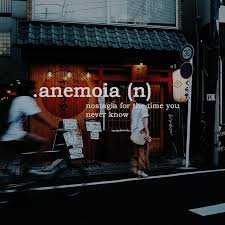
Have you got Anemoia?
The music becomes associated not to the era it came from, but to moments of safety and your own memories. Car journeys, kitchens, weekends, childhood bedrooms. You don’t miss the decade, you miss how you felt when the song played. The past becomes emotional rather than historical.
Fashion works the same way. Old band t shirts, oversized jumpers, and passed down jackets. Styles are inherited long before they’re chosen. What once belonged to your parent’s youth quietly becomes part of your own identity, detached from its original context, and absorbed by the bearer. Fashion then finishes the job. Old styles are stripped of meaning and sold back as timeless. Workwear becomes aesthetic rather than necessity. Subcultural uniforms lose their function and become costumes. What once signalled resistance or belonging now signals taste, a veneer of what it once was.
Every era gets flattened into a look the same way it gets flattened into a sound. The 1960s become slim suits and confidence. The 1970s become flares and freedom. Punk becomes ripped clothes and attitude, not poverty or alienation. The 1990s become oversized everything, grunge without despair, rave without illegality. The mess is removed. The image remains.
The 1980s, more than any other decade, has been completely idealised. Bright colours, sharp lines, retro trainers, graphic knits. This with with gated reverb snares, heavenly pads, and the glassy chimes of the Yamaha DX7, the decade now feels playful rather than tense. The anxiety that shaped it has been replaced with comfort. Pop culture has helped lock this version of the past in place. Stranger Things didn’t just revive the 1980s, it rewrote them. Its version of the 80s is all bicycles, denim jackets, neon lights, and synth. The danger is supernatural, not political. The fear is fictional, beatable, and neatly resolved. Reaganomics, AIDS, and nuclear anxiety don’t exist here. The decade becomes safe, wearable, and emotionally warm.
Music reinforces this editing process. The Roland TR-808, once dismissed as cheap and artificial, now defines entire genres. The E-mu SP-1200, limited and gritty, is revered precisely because it couldn’t do much. Tape hiss, vinyl crackle, un quantised drums, turned into proof of authenticity. Genres follow the same path. Grunge becomes honesty without apathy. Britpop becomes confidence without exclusion. Early rave becomes unity without criminalisation.
These sounds and styles weren’t comforting when they emerged. They were disruptive. They reflected tension, fear, and frustration. Distance removes danger. What once felt unstable now feels human. This isn’t really about clothes or music. They’re just the most visible carriers of anemoia. They allow people to express longing without having to articulate it. To say something about the present without naming it.
Part of the appeal is pace. Style used to be discovered slowly. Scenes formed in specific places. You had to be there or know someone who was. Now aesthetics arrive fully formed, labelled, and ready to be consumed. Identity doesn’t unfold anymore. It’s selected, undoubtedly the work of TikTok and an ever-growing herd mentality. For a generation raised online, the past feels mysterious. Not because it was better, but because it wasn’t constantly observed. Not every outfit was photographed. Not every moment was archived. You could exist without proof.
There’s also safety in longing for something that already ended. The past is complete. We know how it turns out. The future feels unstable, expensive, and increasingly narrow. Compared to that, even a fictionalised version of the past feels solid. So people borrow it. They dress like it. They listen like it. They build identities around decades they never survived, not because they want to return, but because the present doesn’t feel like home.
Anemoia isn’t escapism. It’s a critique. It reveals what feels missing now. Friction, patience, community, meaning. The longing isn’t backward looking, It’s diagnostic. Maybe the point isn’t to endlessly rewear the past or to remix its sounds and silhouettes. Maybe it’s to ask why so many people feel more emotionally connected to eras defined by hardship and tension than to the one they’re currently living in. If the present was truly fulfilling, we wouldn’t be spending so much time missing something that was never ours in the first place.
Nostalgia for something we’ve never known?
Robbie Majewski looks back to look forward
There exists a strange kind of homesickness that has nothing to do with place. It’s the feeling you get listening to a song recorded decades before you were born or watching grainy footage of people dancing in rooms that no longer exist. A longing that feels personal, even though it can’t be. We usually call it nostalgia, but nostalgia implies memory. This is something else entirely. There is a word for it. Anemoia, coined by John Koenig, a nostalgia for a time you never experienced.
You see it everywhere. Teenagers dressing like it’s 1996. Students romanticising the 1970s, the 1980s, even the early 2000s. Baggy jeans that mimic 90s skate culture without the bruises. Leather jackets borrowed from the 70s without the politics. Track jackets and trainers lifted from 80s terrace style, now worn without class identity. It’s not about historical accuracy. It’s about atmosphere and ‘vibe’.
But the past always seems to be cherry picked. Nobody is yearning for Thatcherite England. No one misses mass nemployment, miners strikes, or communities being torn apart. Nobody longs for Cold War dread, nuclear drills, or the constant background fear of a nuclear holocaust. Those parts don’t survive the edit. What survives is the silhouette.
For many people, this longing starts early. Long before you choose your own music, you inherit it. Songs playing in the car, albums stacked by the stereo, radio stations permanently tuned to another decade. You grow up absorbing your parent's music and tastes before you have any of your own. Over time, those songs stop belonging to them and start feeling like yours. This is where anemoia often begins, I know it did for me.